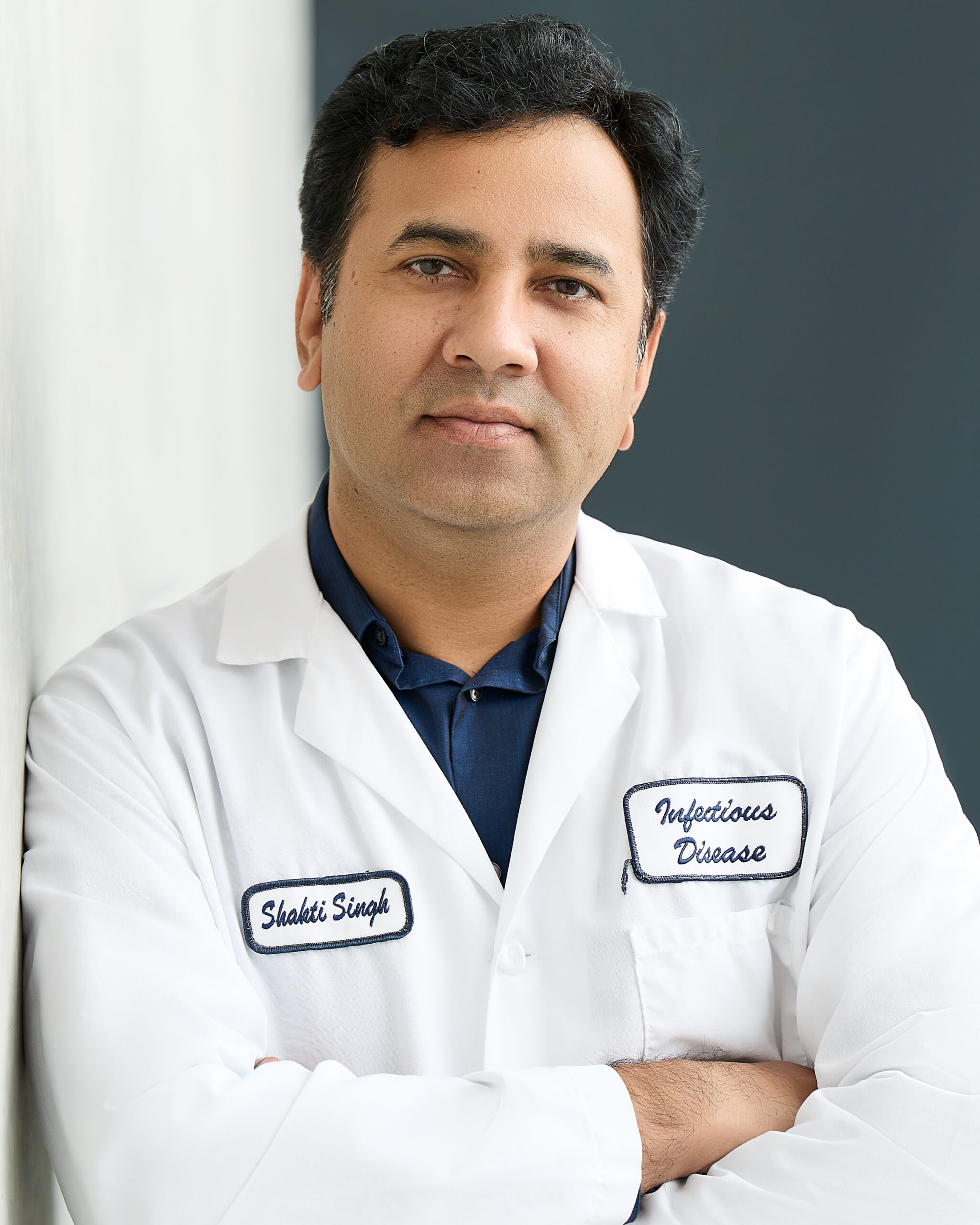
The Lundquist Institute for Biomedical Innovation received new funding from the National Institutes of Health (NIH) to advance cutting-edge research targeting life-threatening fungal infections. Led by TLI investigator Shakti Singh, PhD, the project is supported through an NIH R21/R33 mechanism, with $445,238 awarded for the initial R21 phase. The research aims to develop novel therapeutic strategies against drug-resistant fungal pathogens, a growing global health threat.
The study focuses on two major fungal diseases: aspergillosis and candidiasis, primarily caused by Aspergillus fumigatusand Candida albicans. These infections pose serious risks to immunocompromised populations, including cancer patients, transplant recipients, and individuals living with HIV/AIDS.
Treatment options are increasingly limited due to the emergence of antifungal resistance. Both pathogens have been designated among the World Health Organization’s highest-priority fungal threats, underscoring the urgent need for new therapeutic approaches.
In collaboration with Dr. Keykavous Parang of Chapman University, Dr. Singh’s laboratory is developing a new class of therapeutics known as cyclic antifungal peptides. These molecules are inspired by natural antimicrobial systems and have demonstrated potent activity against drug-resistant fungal strains in early studies.
Unlike conventional antifungals, these peptides target and disrupt fungal cell membranes, a mechanism that may reduce the likelihood of resistance development while maintaining efficacy against difficult-to-treat infections.
The research team will optimize these compounds to improve potency, stability, and safety, and evaluate their performance both as standalone treatments and in combination with existing antifungal drugs.
By enhancing current therapies and introducing new treatment modalities, this work has the potential to significantly improve outcomes for patients with invasive fungal infections.
This project represents an important step toward expanding the antifungal drug pipeline and addressing a critical gap in infectious disease therapeutics. Successful completion of the R21 phase will position the program for further development under the R33 phase, accelerating translation toward clinical application.