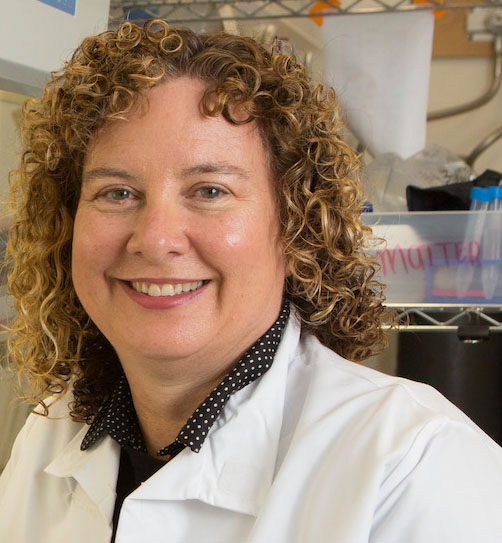
Michelle L. Matter, PhD joins The Lundquist Institute as an expert in two areas of cardiovascular medicine: cardiomyopathies and sepsis. Underlying these two diseases is a common mechanism that involves cell adhesion and mitochondrial metabolism.
Among her many contributions to the medical field, Dr. Matter discovered the peptidyl-tRNA hydrolase 2 (PTRH2; Bit-1; BIT1) gene, a key regulator of various cellular functions. Currently, Dr. Matter’s research is focused on how PTRH2 imparts signals to determine whether a cell lives or dies. By using whole exome sequencing, Dr. Matter and her team identified the first patients with a biallelic loss-of-function mutation in the PTRH2 gene resulting in cell death in multiple organs including cerebellar atrophy.
This gene mutation causes congenital developmental disease, which Dr. Matter and her team named Infantile-onset Multisystem Neurologic, Endocrine, and Pancreatic Disease (IMNEPD), that has a devastating impact on children. Her team is actively researching how PTRH2 protects cells from diseases such as IMNEPD, muscular dystrophy, and cardiomyopathies.
In a new publication in Nature Communications, Dr. Matter and her team has shed light on the underlying processes that cause peripartum cardiomyopathy (PPCM). PPCM is a life-threatening disease unique to pregnant women whereby heart failure develops towards the end of pregnancy or within the first five months after delivery in previously heart-healthy women. Her team found that PTRH2 is essential in protecting the pregnant heart from the extreme mechanical stresses imposed on the heart during pregnancy. When a PTRH2-mediated protective pathway is not activated, these new moms develop PPCM. There are no specific therapies for PPCM.
“I am excited to have brought my team to TLI. TLI’s focus on bio-innovation and translational medicine will help us move our research forward,” said Dr. Matter.
We are thrilled to have Dr. Matter be part of The Lundquist Institute!