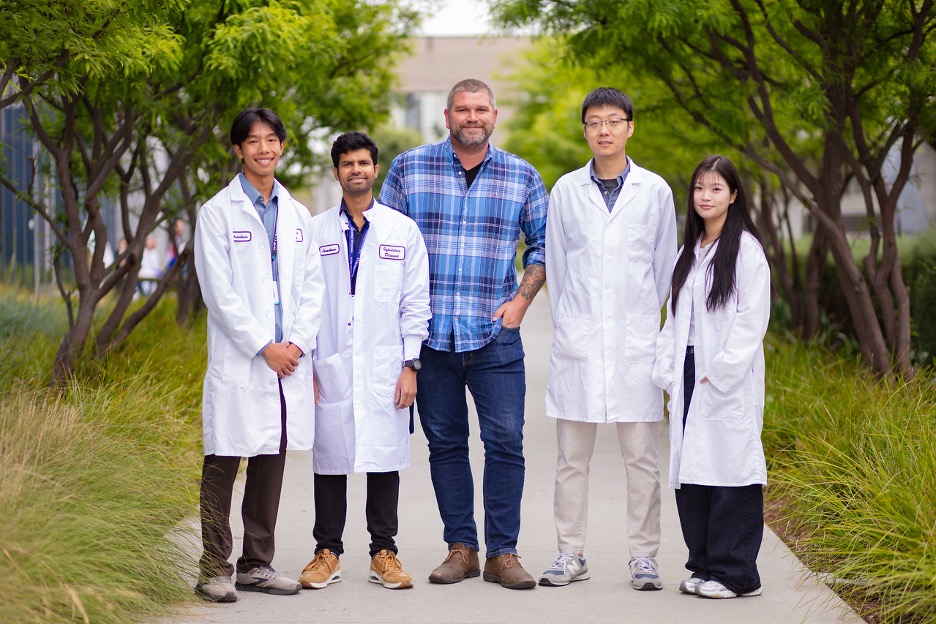
A research team led by Marc Swidergall, PhD, investigator at The Lundquist Institute for Biomedical Innovation with an academic appointment as Assistant Professor-in-Residence at the David Geffen School of Medicine at UCLA, has uncovered a previously unrecognized immune signaling pathway that strengthens the oral mucosal barrier against fungal infection. The study, published in Nature Communications, reveals that the cytokine IL-22 uses a non-canonical receptor complex to remodel epithelial tissues and enhance resistance to Candida albicans, the most common human fungal pathogen.
The findings reshape current understanding of mucosal immunology and highlight a dynamic, two-phase barrier-protection program that prevents fungal overgrowth during both adult and neonatal colonization.
A New View of IL-22: Beyond the Canonical Pathway
IL-22 has long been known to support mucosal barrier function, but Dr. Swidergall’s team discovered that in the oral cavity it signals through an unexpected receptor configuration. Instead of relying exclusively on the classical IL-22RA1/IL-10RB receptor pair, IL‑22 also engages gp130, a signaling chain typically associated with IL-6 family cytokines. This non‑canonical receptor complex triggers mucosal remodeling, and while increasing the production of antimicrobial peptides. Together, these changes create a fortified mucosal barrier that restricts early fungal outgrowth. “Our work shows that the oral epithelium uses a unique IL‑22–dependent mechanism to sense microbial presence and temporarily strengthen barrier defenses,” said Dr. Marc Swidergall, senior author of the study. “This expands our understanding of how immune cells and structural cells cooperate to maintain fungal commensalism without triggering damaging inflammation.”
Implications for Infant Susceptibility to Fungal Infection
In a breakthrough for understanding early-life immunity, the team developed a new neonatal colonization model revealing that IL-22 is especially vital in newborns. When neonatal mice lacked IL-22, their oral tissues failed to mount the normal protective epithelial expansion, allowing Candida to penetrate deeply into the mucosa, a level of vulnerability not seen even in IL-22–deficient adult animals. “Infants are particularly susceptible to oral thrush, and our findings reveal one reason why,” Dr. Swidergall explained. “IL-22–driven epithelial remodeling acts as a crucial early-life defense mechanism before the adaptive immune system fully matures.”
A Foundation for Future Therapeutics
This study provides the first evidence that gp130 participates in IL-22 signaling in the oral mucosa, emphasizing tissue-specific diversity in cytokine receptor biology. The discovery opens new avenues for therapeutic strategies aimed at strengthening mucosal barriers in patients at risk for fungal infections, including immunocompromised individuals and neonates.
The multidisciplinary work involved collaborators from the University of Pittsburgh, the National Institutes of Health, and the University of Tennessee Health Science Center. Dr. Swidergall’s work on mucosal antifungal immunity is funded by NIH grants R01DE031382 and R21AI187999.