Editor’s Note: This is Part 2 of our three-part series exploring how The Lundquist Institute is helping shape the emerging field of Exercise Medicine. New to the series? Read Part 1: Why Exercise Is Becoming a Precision Prescription and Part 3: The Science Defining a New Medical Discipline.
Part 2 of 3
Research has firmly established exercise as one of the most effective interventions for preventing and managing chronic disease. Yet today’s medical students in the US receive a total of between 8 and 12 hours of formal education on the role exercise plays in patient care. Closing that gap is essential, and it begins by training physicians to evaluate and prescribe exercise with the same precision and confidence as any other evidence-based therapy.
Investigators at The Lundquist Institute have been leaders in the field of Exercise Medicine since the 1970s, when Karl Wasserman, MD, PhD, and Brian J. Whipp, PhD, developed the modern cardiopulmonary exercise test (CPET), now considered the gold standard for evaluatingexercise intolerance in health and disease. Today, The Lundquist Institute is building on that legacy by helping prepare the next generation of physicians who will use exercise not only to diagnose disease, but also to treat it.
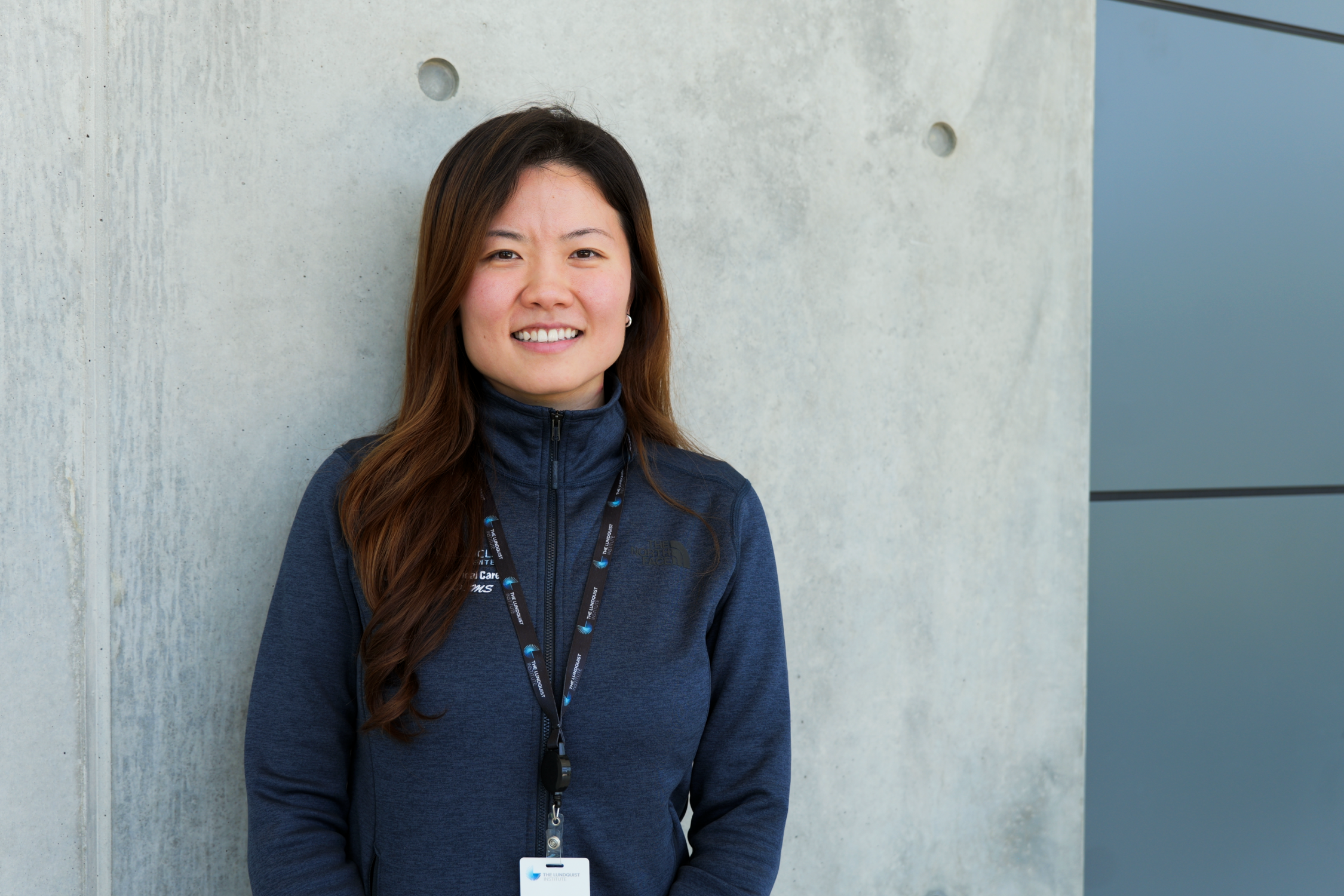
This summer, The Lundquist Institute welcomes Julia Lu, MD, MS, as the inaugural fellow in its new adult Exercise Medicine Fellowship Program, one of the nation’s first programs dedicated to training physicians in this emerging field. The program reflects a growing recognition that exercise should be integrated into healthcare with the same rigor as other evidence-based treatments.
The one-year fellowship is designed for physicians who have completed residency or fellowship in specialties such as internal medicine, pulmonary medicine, and cardiology. Fellows receive advanced training in exercise physiology, exercise testing, exercise prescription, and the application of physical activity as both a preventative strategy for healthy adults and a therapeutic intervention for people living with chronic disease.
For Dr. Lu, the fellowship is the culmination of a journey shaped by both personal experience and clinical training.
Born in China, Lu immigrated to the United States with her family at age 10. Watching her grandparents age sparked an early interest in healthcare, leading her to pursue medicine at the California University of Science and Medicine as a member of the school’s inaugural graduating class. Initially drawn to internal medicine, her perspective shifted during a fourth-year rotation in the medical intensive care unit, where she witnessed the challenges faced by patients with advanced pulmonary disease and began asking a different question: How can we improve patients’ quality of life before they reach the end of life?
That question ultimately led her to pulmonary medicine and to cardiopulmonary exercise testing during residency, where she saw firsthand how exercise assessment could transform patient care.
In practice today, exercise is often used by physicians as a treatment, but with very little understanding of what that term means. I want to see how we can change that paradigm, using exercise scientifically and methodologically to help patients see the progress and improvements they achieve in real time.
Julia Lu, MD, MS
As The Lundquist Institute’s first Exercise Medicine Fellow, Dr. Lu hopes to integrate what she learns into her own clinical practice while helping other physicians incorporate Exercise Medicine into routine patient care. Her goal reflects the fellowship’s broader vision: to prepare physicians who can prescribe exercise with the same scientific rigor as medications and other evidence-based therapies.