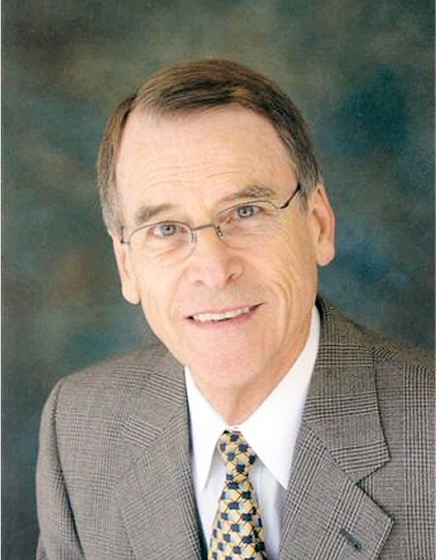
A Legacy of Discovery, Leadership, and Impact at The Lundquist Institute
Delbert A. Fisher, MD, an internationally recognized leader in pediatric endocrinology and a key contributor to the history of The Lundquist Institute, passed away on March 4, 2026.
Dr. Fisher began his affiliation with Harbor-UCLA Medical Center and what is now The Lundquist Institute in 1968, when he joined the then Research and Education Institute as a researcher. At the same time, he served as Division Chief of Pediatric Endocrinology and Metabolism at Harbor-UCLA Medical Center. He later became Chair of the Department of Pediatrics, where he helped shape a generation of clinician-scientists and promoted both scientific rigor and clinical impact.
During his time at Harbor-UCLA and the Institute, Dr. Fisher led pioneering research that transformed the understanding of endocrine physiology during fetal development. He was among the first to systematically investigate the fetal and neonatal thyroid system, laying the foundation for critical advances in neonatal care.
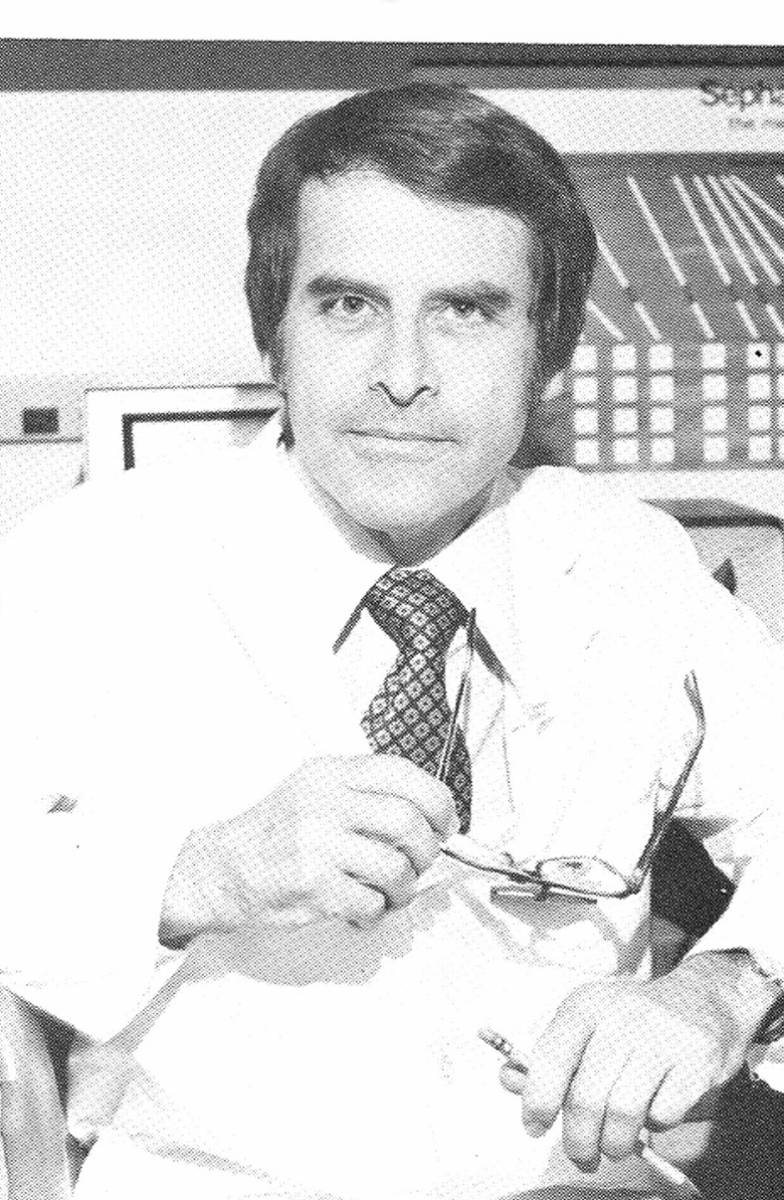
In 1979, Dr. Fisher and his colleagues developed radioimmunoassay techniques that enabled simple and highly effective newborn screening for congenital hypothyroidism. This innovation was implemented nationwide and has improved the lives of countless children through early diagnosis and treatment. Barbara Foley Ferreira, former Director of the Newborn Screening Program at Harbor-UCLA/TLI recalls: “He was a powerhouse in endocrinology and an incredible force with Newborn Screening. I was very lucky to have had the opportunity to work with him in the early screening days.”
Dr. Fisher also played an important leadership role within the Institute. He served on the Board of Directors from 1999-2004, including as Board President from 2000-2001, and helped guide the organization during a period of growth. In recognition of his lasting impact, he was named to the inaugural class of Legends of the Institute in 2004.
Dr. Fisher’s legacy at Harbor-UCLA Medical Center and The Lundquist Institute is reflected not only in his specific contributions but also in the culture of excellence, mentorship, and translational impact he helped establish.
Through teaching, mentorship, and collaboration, he shaped countless lives, extending his influence through generations of trainees and colleagues. Dr. Fisher and his wife, Beverly, often reminisced fondly of their time at the University of Arkansas Medical Center, where he served as Director of Pediatric Endocrinology and Metabolism from 1960 to 1968. His pediatric endocrine group trained Joycelyn Elders, Arkansas’s first pediatric endocrinologist, who later served as U.S. Surgeon General.
Mitch Geffner, MD, pediatric endocrinologist at Children’s Hospital Los Angeles, will never forget interviewing with Dr. Fisher for a fellowship in 1978. Dr. Geffner remained impressed over the years by his leadership contributions, including as past President of both the Pediatric Endocrine Society (PES) and the Endocrine Society. Now a past President himself, Dr. Geffner remembers that “he was quite brilliant and always kind to me personally.”
Carol Berkowitz, MD, Division Chief of General Pediatrics at Harbor-UCLA, recalls partnering with Dr. Fisher in leadership when he was Chair of Pediatrics and she served as Associate Chair. Widely recognized for his strong academic reputation and substantial scholarly contributions, Dr. Fisher had a straightforward but reserved personal style. In 2001, Dr. Fisher was presented with the Howland Award by the American Pediatric Society at their black-tie awards event. During the event, Dr. Berkowitz honored him by writing a poem about his work on the thyroid, a gesture Dr. Fisher truly loved.
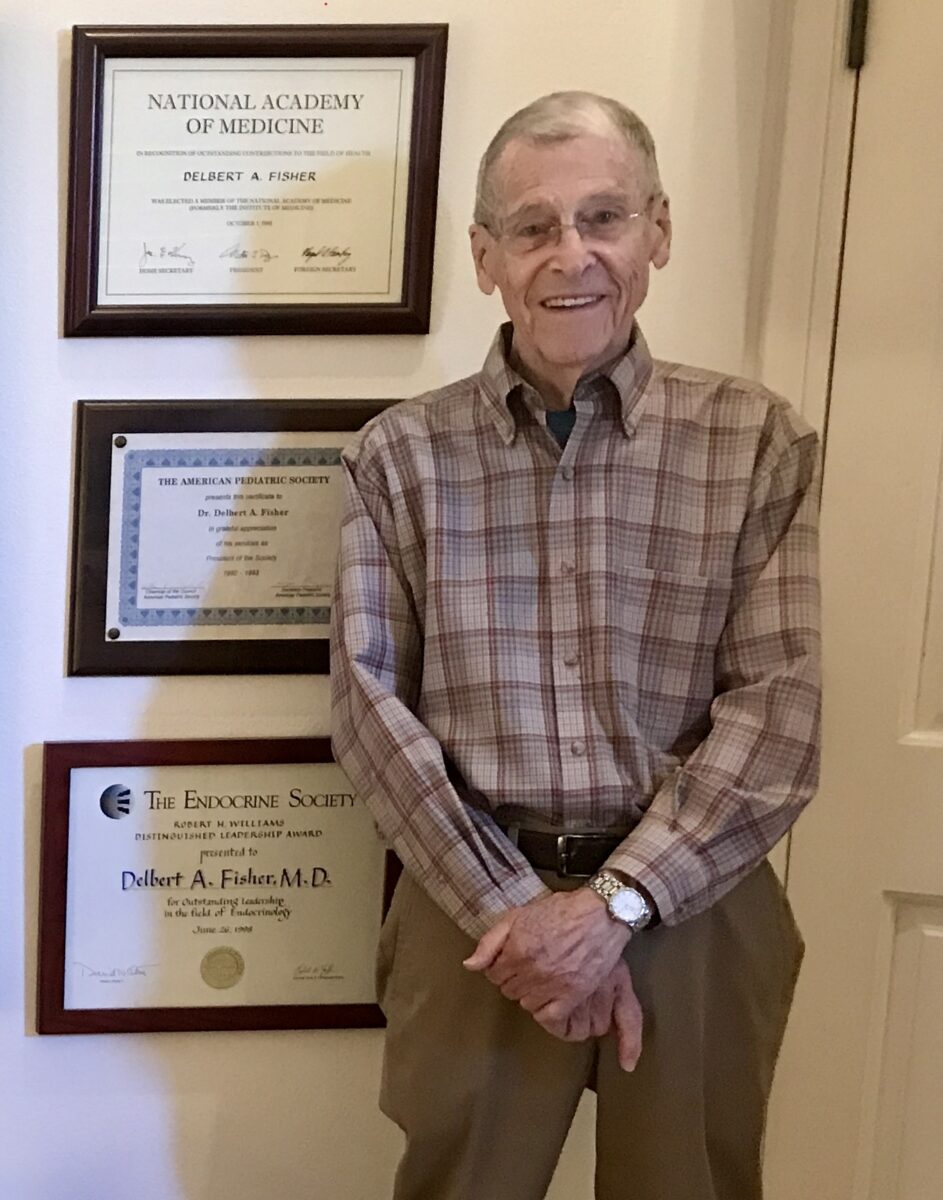
Jennifer Yee, MD, current Division Chief of Pediatric Endocrinology at Harbor-UCLA, feels deeply honored and privileged to be part of the Department where Dr. Fisher left such an enduring legacy. He and Beverly established the Fisher Visiting Professorship to sponsor an annual lecturer to visit UCLA, Harbor-UCLA, and Cedars-Sinai. “The opportunity to know him and Beverly, and to hear their reflections on how medicine and the institution evolved over time, was extremely meaningful.” She appreciates the inspiration Dr. Fisher’s work contributed to TLI and Harbor-UCLA.
Ronald Swerdloff, MD, current TLI Investigator and 2016 TLI Legend, recalls: “I had the good fortune to work in the shadow of Del in the magical late 1960s and 1970s when the measurement of blood hormone levels became possible. As a member of the Endocrine faculty at Harbor, Del was arguably one of the most celebrated in the country. Del will be greatly missed by many who admired him and were fortunate to work with him and know him as a friend.”
Dr. Delbert Fisher’s work continues to exemplify The Lundquist Institute’s commitment to translating discovery into improved care and better health outcomes for patients and communities.