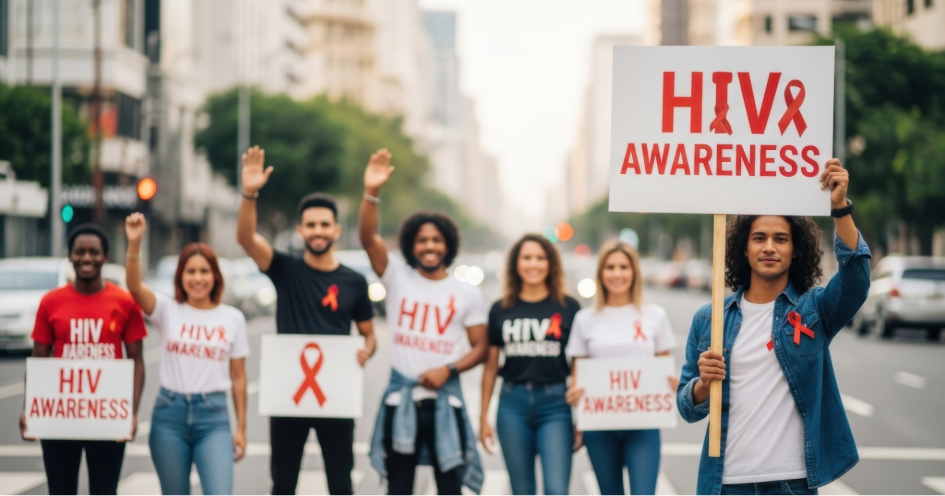
Every December, HIV Awareness Month urges us not only to reflect on medical breakthroughs, but also to confront the inequities that endure despite them. Modern antiretroviral therapy has enabled people with HIV (human immunodeficiency virus) to live long, healthy lives, yet systemic disparities mean that progress is not shared equally. For Dr. Raul Macias Gil, MD, this gap—between what is possible and what is accessible—is where the most urgent work begins.
A physician-researcher committed to dismantling health inequities, Dr. Macias Gil centers LGBTQIA+ communities and communities of color, particularly Hispanic/Latinx and Black populations. He examines how systemic inequities, structural barriers, and the social determinants of health shape real vulnerability.
Challenging Myths That Mask Inequity
One of the most persistent misconceptions Dr. Macias Gil encounters is the idea that HIV is “no longer a concern.” Prevention and treatment have improved so dramatically that some believe the epidemic has been resolved. But the reality is more complex. “While it’s true that modern antiretroviral therapy allows people with HIV to live long, healthy lives, the virus continues to disproportionately affect communities of color, particularly Black and Latino individuals, and LGBTQIA+ communities, due to longstanding barriers in access, stigma, and structural inequities,” he explains.
Another myth he frequently challenges is the belief that HIV affects only certain “risk groups.” This mindset reinforces stigma and obscures the root cause of disparities. “In reality, HIV reflects broader social and structural vulnerabilities, not identity,” he emphasizes. Recognizing this is not merely a matter of awareness—it is “super important to implementing effective prevention strategies.”
For Those Disconnected from Care: Start Small, Start Somewhere
Many people who could benefit from prevention feel deeply disconnected from healthcare systems. That disconnection is not about indifference—often, it stems from painful histories of mistrust, negative clinical experiences, discrimination, or lack of culturally aligned care. For these individuals, Dr. Macias Gil stresses the importance of finding what he calls a “trusted point of entry.”
“The most important first step is finding a trusted point of entry, whether that’s a local clinic, a community-based organization, a mobile testing site, or even outreach efforts at neighborhood events,” he says. Even small actions matter. “Periodic testing or speaking confidentially with a community health worker can open the door to prevention and early treatment.” He adds that prevention tools—like HIV testing, PrEP, PEP, and sexual health screenings—are “more accessible than many realize, especially through safety-net systems like DHS.”
How Providers Can Build Trust, Not Barriers
Healthcare providers can either reinforce stigma or dismantle it. According to Dr. Macias Gil, change begins with how providers talk about sexual health and prevention. “Providers have a powerful role in breaking down stigma and bridging gaps in trust,” he says. This means offering HIV testing routinely, without assumptions; proactively discussing prevention tools like PrEP withall sexually active patients; and using “language that is inclusive, nonjudgmental, and culturally aligned.”
But change cannot rest solely on individual interactions. “At the systems level, we also need provider training, simpler pathways for prescribing PrEP and long-acting injectables, and stronger partnerships with community organizations.” Ultimately, prevention should never feel like a maze. “People shouldn’t have to navigate prevention alone—we should meet them where they are.”
Disparities Are About Inequity—Not Behavior
When discussing why HIV cases are rising among Black and Latino communities, Dr. Macias Gil is clear: “These disparities are not about behavior; they’re about inequity.” Factors like structural racism, unstable housing, limited access to preventive services, medical mistrust, lack of culturally competent care, and socioeconomic stressors “all intersect to create higher vulnerability.” Meanwhile, communities with the highest burden often have “the least access to the newest prevention tools.”
What he wishes more people understood is simple but profound: “Inequities, not individual choices, drive these gaps.” Addressing HIV means addressing the social conditions in which people live, work, and seek—or avoid—care.
Hope in Innovation and Community Power
Despite these disparities, Dr. Macias Gil sees tremendous hope in innovations that are expanding both options and accessibility. He highlights status-neutral care, long-acting injectable HIV treatment and prevention, and Doxy-PEP as an STI prevention strategy as promising tools that could reshape care. Yet, technology alone cannot drive change. “Just as importantly,” he says, community-led models are transforming how people access care.
These strategies include bilingual testing events, culturally tailored education, mobile clinics, and partnerships with trusted community organizations. He points to previous work with the Test-to-Treat Equity Program during COVID-19 as evidence. “It highlighted how powerful it is when public health and community voices work together,” he reflects. “These same principles are essential for ending the HIV epidemic.”
A Path Forward Rooted in Trust, Community, and Equity
The future of HIV prevention is not defined solely by scientific breakthroughs, but by the ability to ensure every community can benefit from them. As Dr. Macias Gil reminds us, equitable care is not just about having the tools—it’s about delivering them with dignity, cultural respect, and community partnership.
Ending HIV requires more than medicine. It requires listening, rebuilding trust, and honoring lived experiences. And it starts with meeting people where they are.