
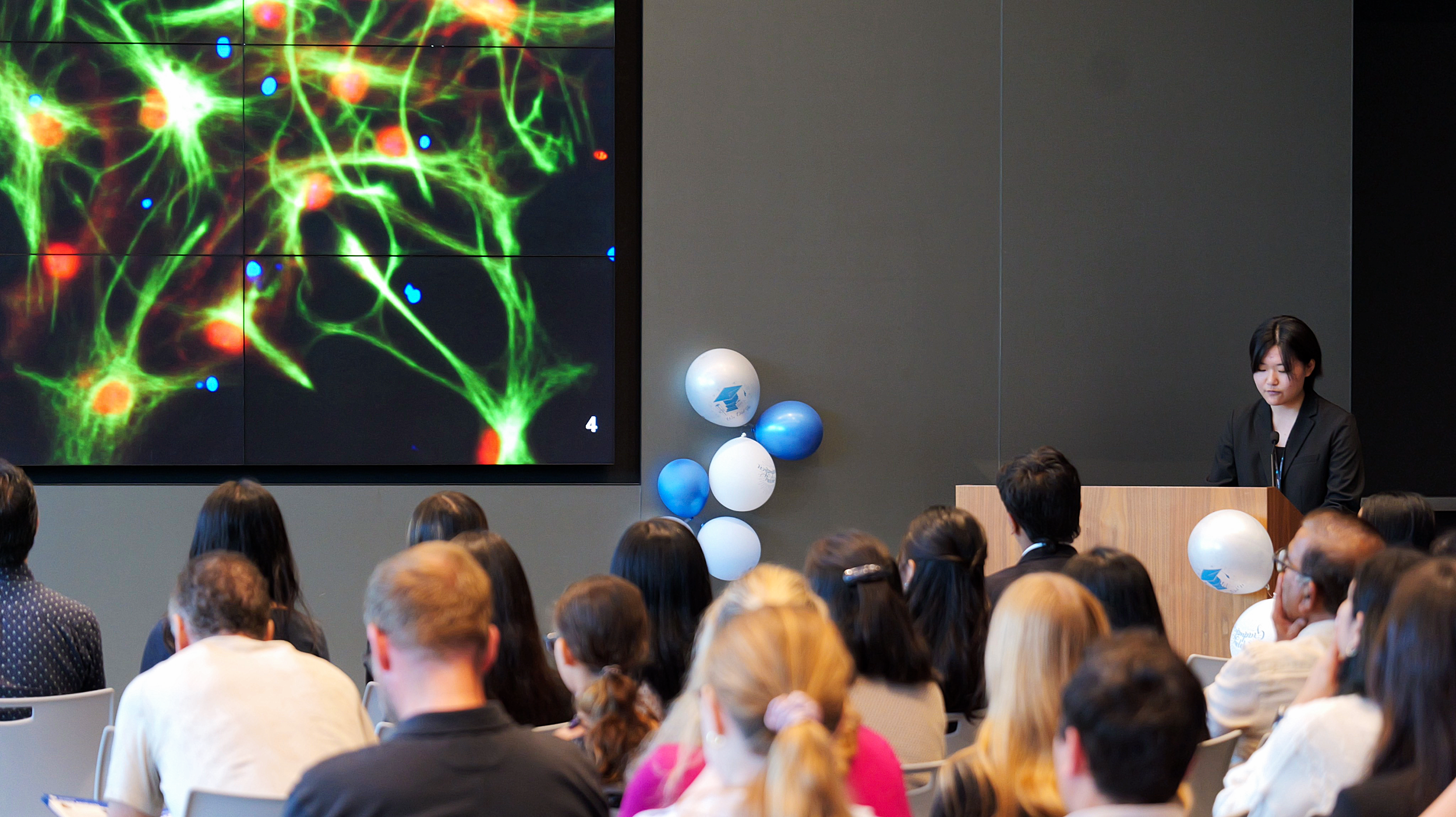
My time at the STAR High School Program has not only taught me profound lessons, but it has also led me to waste countless hours for nothing… or so I once thought. Let me explain.
Throughout this summer, I had the privilege of interning at the Desai-Ross lab. We intended to investigate the effects of fructose on mouse hippocampal cells. With this in mind, I read up on everything I could, from past scientific literature to the exact protocols we would use. After our lab successfully dissected the tissue and cultured the cells, everything seemed to go according to plan—until a power outage and an incubator malfunction brought the experiment to an abrupt halt.
We later moved to an entirely different topic: human mammary epithelial cell lines. My labmates and I delved into the nitty-gritty of these specimens. And yet again, we hit another roadblock. The laboratory technique we would use to examine these cell proteins—the notoriously challenging Western blot—would take a Herculean effort. By the time we finished it, we would be scraping by with just over a week to complete our individual projects.
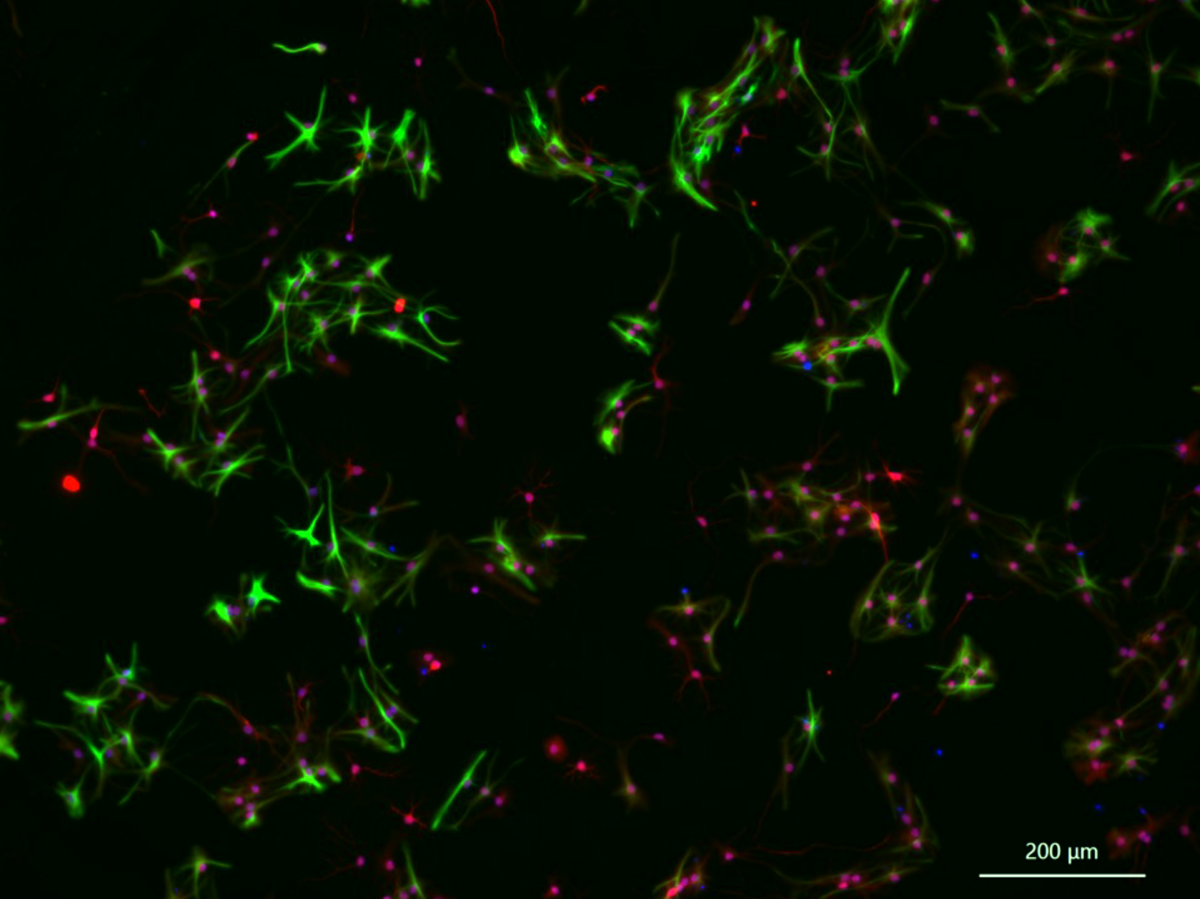
Rather than forcing the experiment forward, we adapted our approach and shifted our focus once again. We returned to studying fructose, this time using neural cells from mouse embryos. And needless to say, another issue emerged. My labmates and I, after long hours quantifying these cells across dozens of microscopy images, found that our data was inconsistent. All because of a simple mistake: some of our images were saved in the wrong file type. This meant that the dimensions were off, the values we painstakingly measured were inaccurate, and we were back to square one once more.
Failure Isn’t the Enemy
We’ve all heard that failure is a part of science, yet the heartache when it actually happens never seems to ease. For our lab, each setback made it feel as if our previous work had been for nothing. It didn’t matter how carefully we planned or how hard we worked; equipment failed, mistakes happened, and we were left with no choice but to start again. If hard work is supposed to pay off, how come ours didn’t?
Looking back, though, I’ve come to realize that the problem wasn’t the obstacles themselves; it was the way I viewed them. The whole time, I sought an outcome. Proliferating cells. Statistically significant findings. Anything to prove that we were headed in the right direction, that we were “successful.”
It was because of this tunnel vision that I found each failure harder to recover from. But in truth, success does not equate to perfectly run experiments, notable results, or, for us students, another item to list on our CVs. Rather, it relies on something less visible: the discipline to persevere despite uncertainty. Although I’ve spent numerous hours reading scientific literature irrelevant to my project, I’ve familiarized myself with science far beyond what’s taught in a high school classroom. And with each pipetting error and faulty cell measurement, I became ever more awestruck by the diligence involved in scientific discovery. Under our societal definition of success, these efforts may seem futile, but considering the knowledge gained, skills acquired, and lessons learned, it’s a win in my book.
This article isn’t in any way an attempt to romanticize failure. It’s bitter, disorienting, and above all, inescapable. So if we can’t prevent failure in our lives, the least we can do is grow from it. And this is the exact mindset that pushed my labmates and me to get back on our feet. We no longer viewed each obstacle as a roadblock, but as another problem to solve. And eventually, we did it: we found statistically significant results.
The Non-Pregnant Mice Predicament
Much to my surprise, my mentor, Dr. Desai, was in the same boat. I always assumed that Dr. Desai was a superhuman scientist; how could someone with decades of experience ever comprehend our struggles?
Her story involves her research on mice, and one step was to get the mice pregnant. Yet week after week, they never did. It was only after Dr. Desai stayed late that she realized what was wrong: the controlled light cycles in the animal facility had malfunctioned, and the lights were always on. Since mice are nocturnal, mating and ovulation occur during the dark cycle, so of course they wouldn’t ever become pregnant!
As comical as this story may be, I found a peculiar sense of comfort in it. You can be the smartest, most accomplished person in your field, but you won’t escape failure. Nevertheless, it’s through overcoming these hurdles that we gain clarity about our flaws, develop conviction in our goals, and, most importantly, discover ourselves.
A Debt of Gratitude
A special thank you to my mentors, Dr. Mina H. Desai, PhD, MS, and Dr. Michael G. Ross, MD, MPH, for not only showing us how to conduct research, but also what it means to be a researcher. To my co-mentors, Jacqueline Hernandez and Shruti Saxena, for guiding us with unwavering patience and humility. To my labmates, Evalyn, Reema, and Enrique, for teaching me that science is deeply human: as we collaborate, try again, and find a solution together. And to Dr. Joe W. Ramos, PhD, Ms. Chen, the Marketing and Communications team, the program staff, and donors for making this internship possible and for believing that we students can make meaningful change.
The Lundquist Institute’s STAR High School Program isn’t merely about gaining insight into the world of research. It’s something much more invaluable. These past eight weeks have shaped our character to lengths we would never have reached without the looming presence of adversity. And being able to experience this with the aid of acclaimed investigators, physician-scientists, dedicated researchers, and other aspiring scientists such as yourself has made this uphill climb all the more worthwhile.
In the end, those wasted hours… weren’t so wasted after all.