Imagine a patient managing type 2 diabetes who also has early signs of kidney trouble and shortness of breath climbing stairs. Today, that person might see an endocrinologist for their blood sugar, a nephrologist for their kidneys, and a pulmonologist for their breathing—three specialists, three separate conversations, and no one connecting the dots between them.
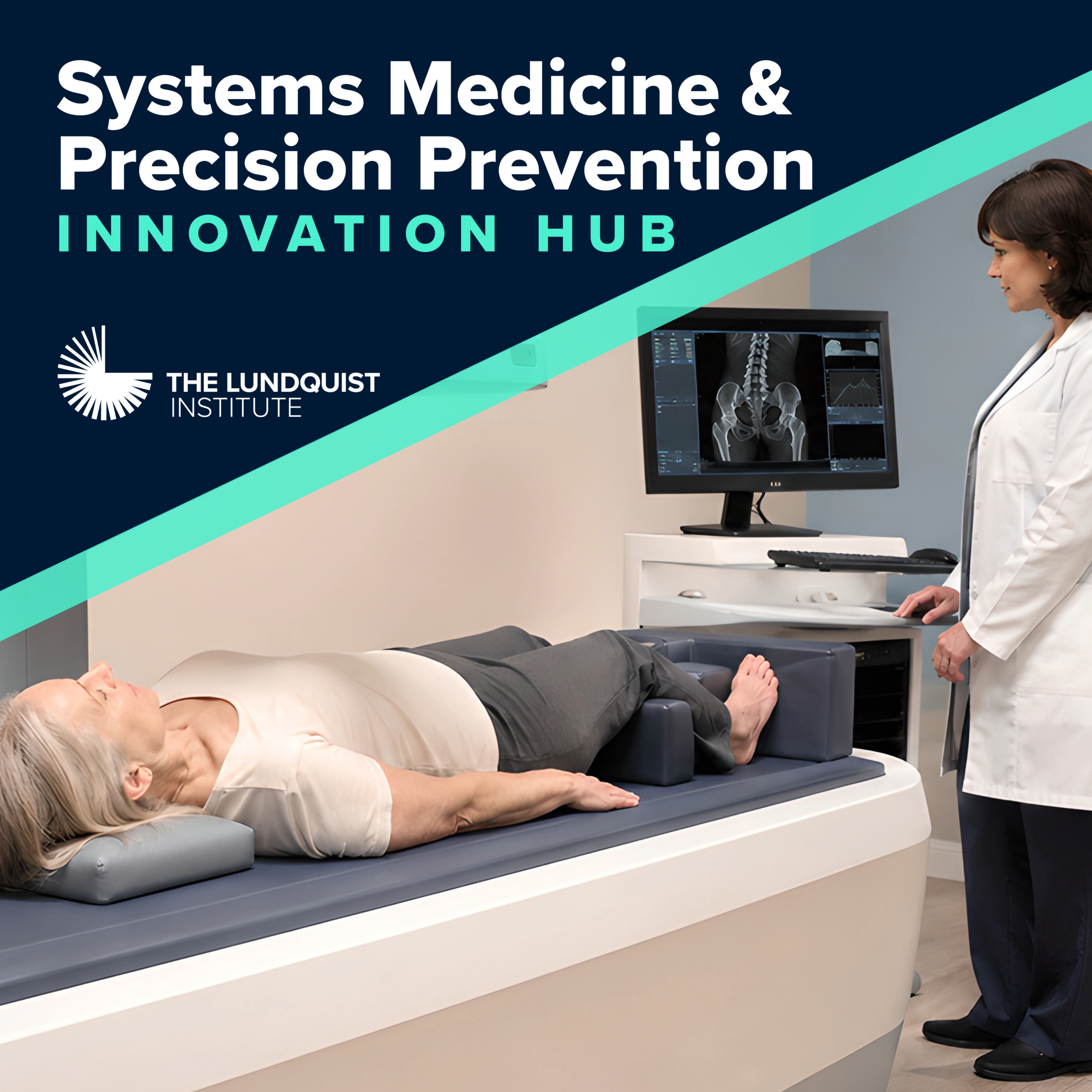
At The Lundquist Institute, a new research hub is working to change that pattern, not just for this hypothetical patient, but for the many real people whose health doesn’t fit neatly into one specialty. Led by executive directors Harry Rossiter, PhD, and Rajesh K. Garg, MD, the Systems Medicine and Precision Prevention Innovation Hub brings together basic scientists, clinical researchers, and physicians around a simple but ambitious idea: research is most powerful when it’s connected.
“Our mission is to improve the quality and quantity of research,” said Dr. Garg. “Our vision is that by bringing clinicians and basic science researchers together, we can make this research more meaningful for our patients and for human health.”
That connection matters because research too often happens in silos. A scientist studying disease mechanisms in a lab may not always know how their findings could change patient care. A physician who spots a pressing clinical question may not know how to design a study, secure funding, or find the right collaborator to answer it. As Dr. Rossiter puts it, the hub exists to break down barriers that prevent research from advancing, making sure that those who want to do research are actually able to do it.
What this means for patients
This kind of connected research is not an abstract goal—it’s the difference between treatments that manage one problem at a time and care that understands the whole person. The hub’s membership already spans cardiology, endocrinology, nephrology, pulmonary medicine, gastroenterology, and biostatistics, with investigators working across the full continuum of discovery—from cell biology in the lab to population-level studies of chronic disease.
That range matters for something as common as heart disease, diabetes, kidney disease, or lung conditions, where the underlying biology, the clinical treatment, and the everyday realities of a patient’s life are usually studied separately. When a lab discovery about how metabolic disease damages blood vessels reaches a cardiologist and a nephrologist working in the same hub, it can shape earlier screening, better-targeted treatment, and clinical trials designed around what patients need— not just what’s convenient to study. Over time, that could mean fewer trips between specialists, treatment plans that account for how conditions interact, and a better shot at catching problems before they become emergencies.
Investing in the next generation of care
A central priority for Dr. Rossiter and Dr. Garg is mentorship. New physicians and early-career researchers often spend months figuring out who’s doing what and how to get started, time the hub hopes to reclaim by connecting newcomers with experienced mentors from day one. The goal is for junior faculty to get guidance while senior investigators build stronger teams. “Catching people as soon as they arrive, rather than letting them “float around” for months, is essential to building a lasting research culture,” Dr. Rossiter said. “One that ultimately trains the physicians and scientists who will be caring for patients for decades to come,” he added.
A hub built to change lives, not just publish papers
The payoff of this approach reaches far beyond The Lundquist Institute. By pairing scientific discovery with clinical expertise and the infrastructure to act on it, the hub is positioned to accelerate progress on the chronic diseases that affect millions of people. “Our hub has the potential to transform prevention and treatment of chronic disease. We cover the whole spectrum, and we can change the world,” said Dr. Rossiter.
For Dr. Garg, the mission comes down to a single sentence: “We are going to make research meaningful for human health.” That means every project—whether basic science, a clinical trial, or a quality improvement study—is ultimately measured by the same standard: does it make people healthier, and does it make their care easier to navigate?
The Systems Medicine and Precision Prevention hub is just getting started. But for patients across the community, its founders’ vision points to a future where research isn’t something that happens far away from their care, it’s the reason their care keeps getting better.