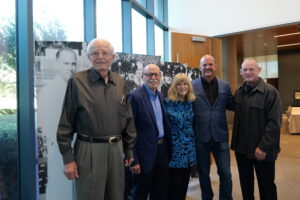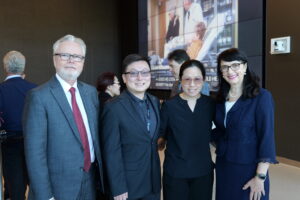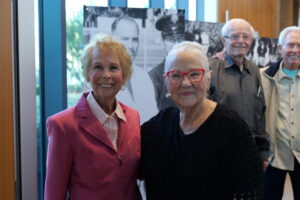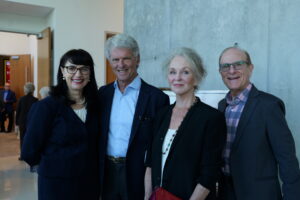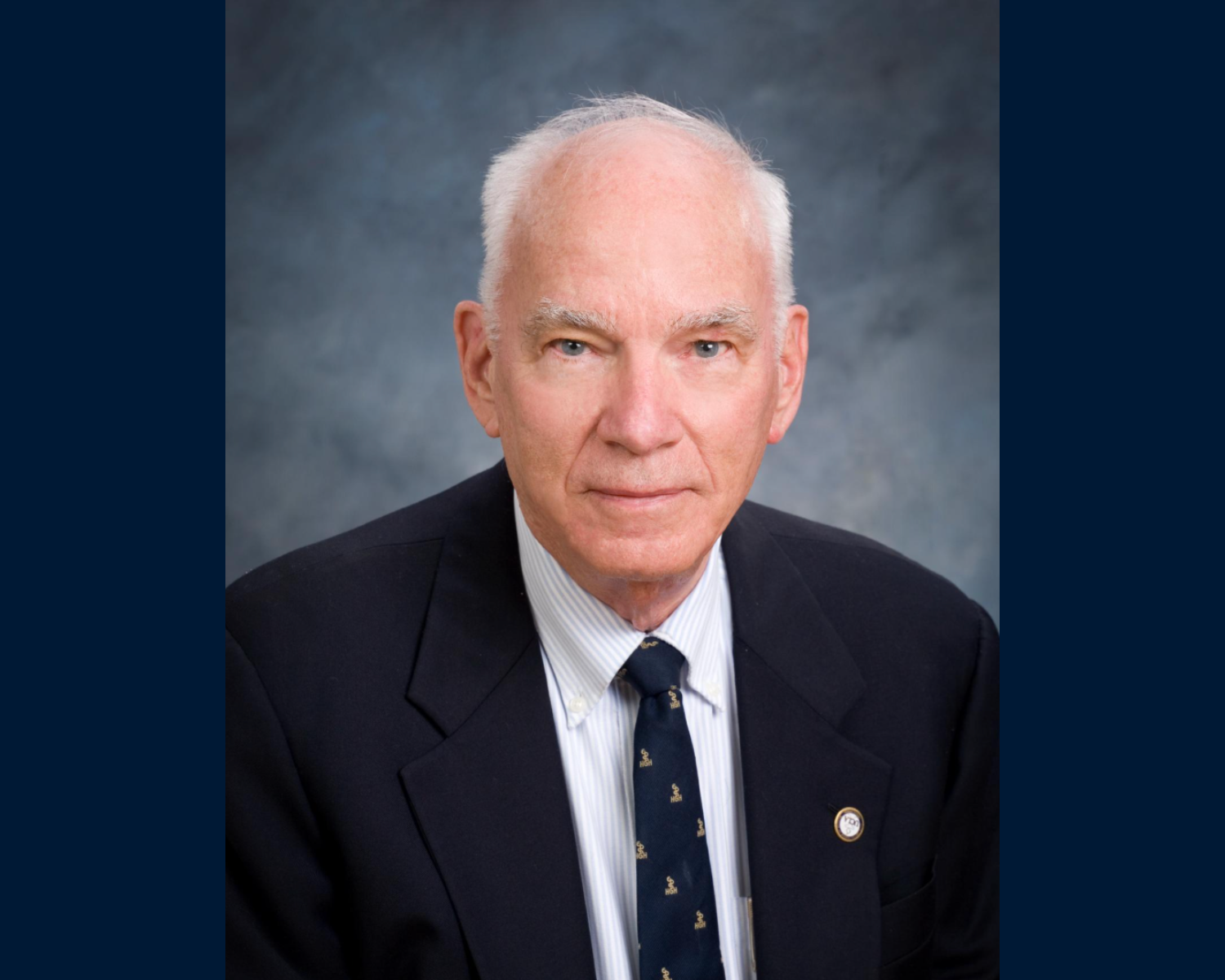
Family, colleagues, former trainees and the first paramedics gathered to honor our 2004 Legend: consummate clinician, innovator, mentor, and teacher
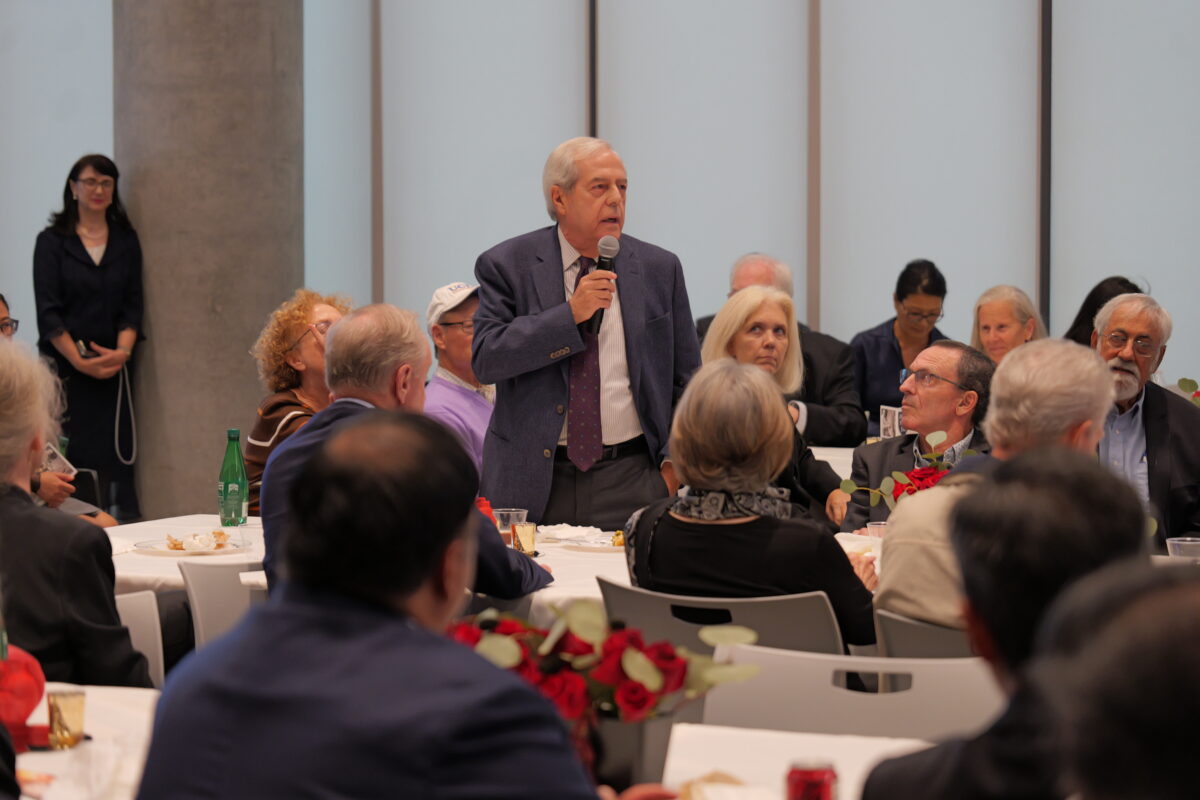
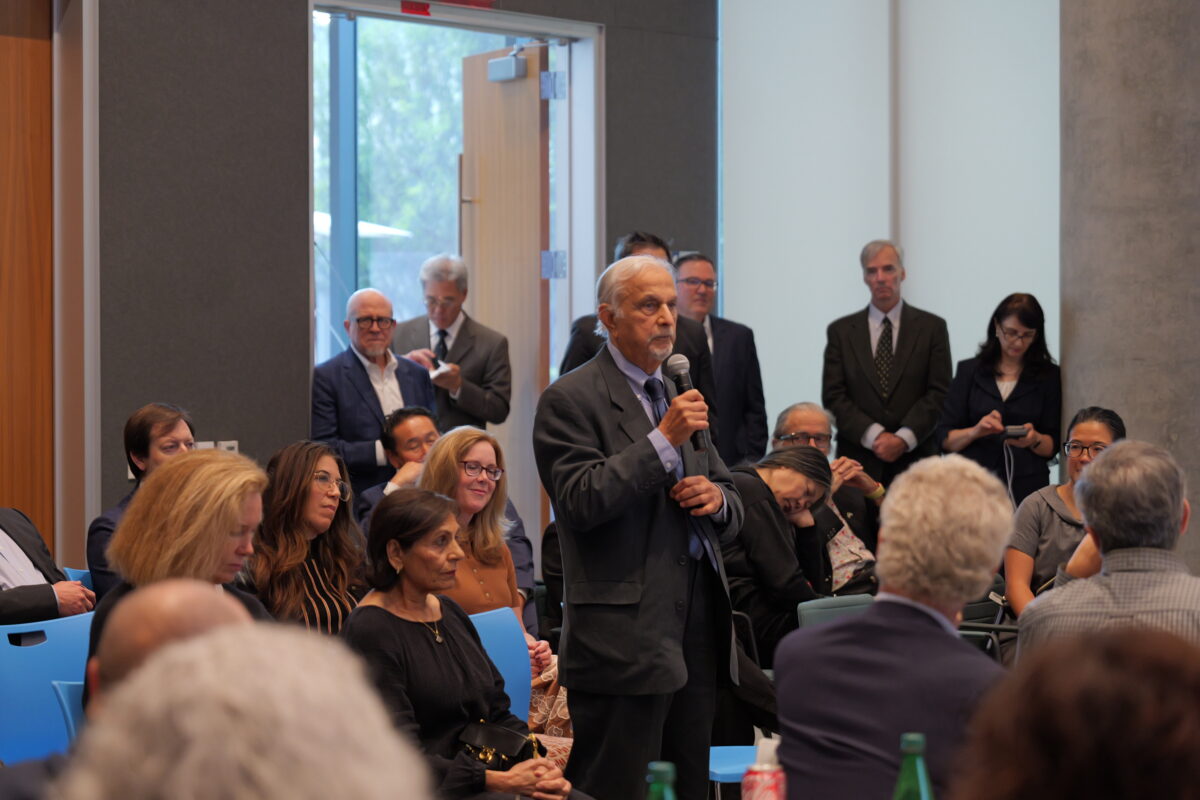
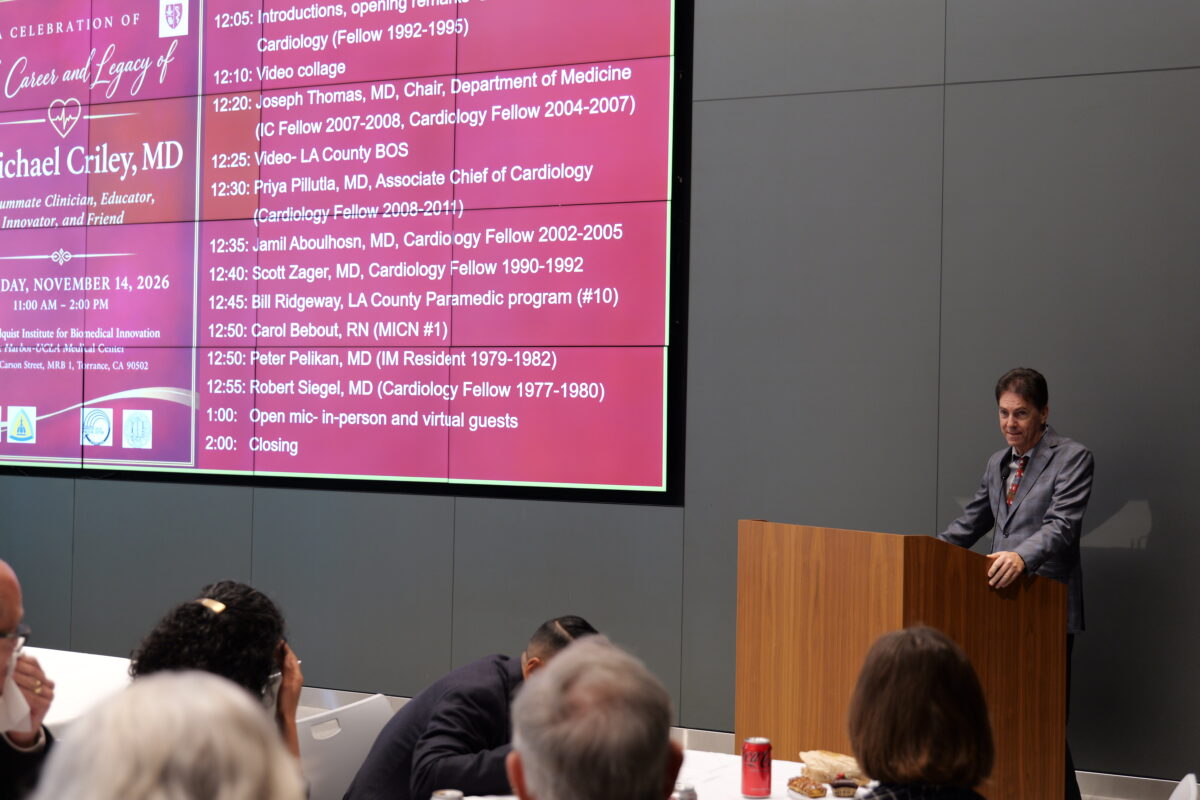
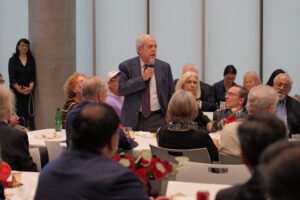
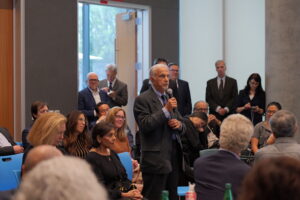
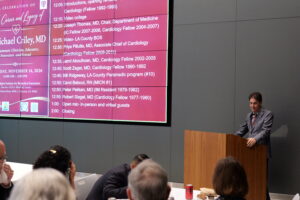
On Saturday, November 14, 2026, family, colleagues, former trainees, nurses and firefighters filled the MRL-1 Auditorium at The Lundquist Institute, with many more joining online, to celebrate the life of John Michael Criley, MD. Dr. Criley, who was named a Lundquist Legend in 2004 and whose name is set in our Walk of Legends, passed away June 15, 2026, at the age of 95.
“You cannot spend much time on this campus without running into his legacy at every corner,” said Dr. Joe W. Ramos, President and CEO of The Lundquist Institute, in his welcome. “Today, when someone calls 911 and help arrives in time, that traces back to this campus and to him.”
The afternoon, hosted by The Lundquist Institute together with Harbor-UCLA Medical Center and organized by Ronald Oudiz, MD, Chief of Cardiology and a former Criley fellow, brought together several generations of people whose careers Dr. Criley shaped. When Dr. Oudiz asked everyone who had trained under Dr. Criley to stand, the vast majority of the 150 individuals in attendance rose.
Bringing Coronary Care to the Patient
Dr. Criley completed his undergraduate and medical studies at Stanford University, then trained on the Osler Service at Johns Hopkins Hospital, where he went on to direct the cardiac catheterization laboratory. In 1967, in his mid-thirties, he moved his family west to become Chief of Cardiology at Harbor General Hospital, now Harbor-UCLA Medical Center. He led the division for 25 years, served on the faculty for more than four decades, and had joint appointments as Professor of Medicine and of Radiological Sciences at the UCLA School of Medicine.
In July 1968, he and nurse Carol Bebout, RN, opened the first coronary care unit in Los Angeles County, carved out of patient rooms on 4 West. Dr. Criley drew the floor plans, chose the monitoring equipment and trained the nurses himself. “In 1968, highly specialized training for nurses was relatively unknown,” Ms. Bebout told the audience. “I credit Dr. Criley with the inception of highly specialized training for nurses.”
Dr. Criley saw that too many heart attack patients were dying before they ever reached the hospital, so he set out to bring coronary care to them. In 1969 he began training firefighters from the Los Angeles County and Los Angeles City fire departments at Harbor General, launching one of the first paramedic programs in the nation. Before any law allowed it, nurses from the coronary care unit ran down the fire escape to ride along on calls.
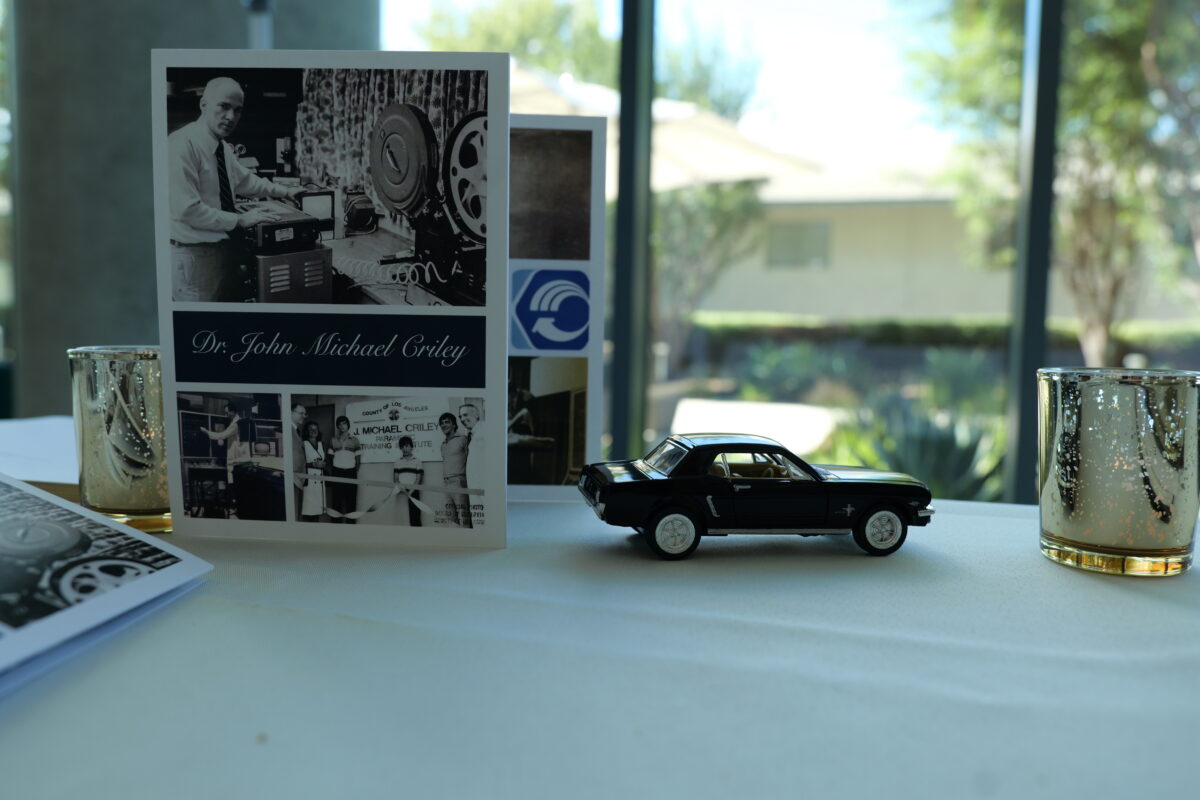
To enable that practice to become more commonplace, Dr. Criley co-wrote the Wedworth-Townsend Paramedic Act, signed into law in 1970. Working alongside Los Angeles County Supervisor Kenneth Hahn, he won over legislators and Governor Ronald Reagan, and the program he founded became a model for paramedic care across the country. The Los Angeles County Paramedic Training Institute he started continues its mission today, and the 1970s television series Emergency! drew in part on his work.
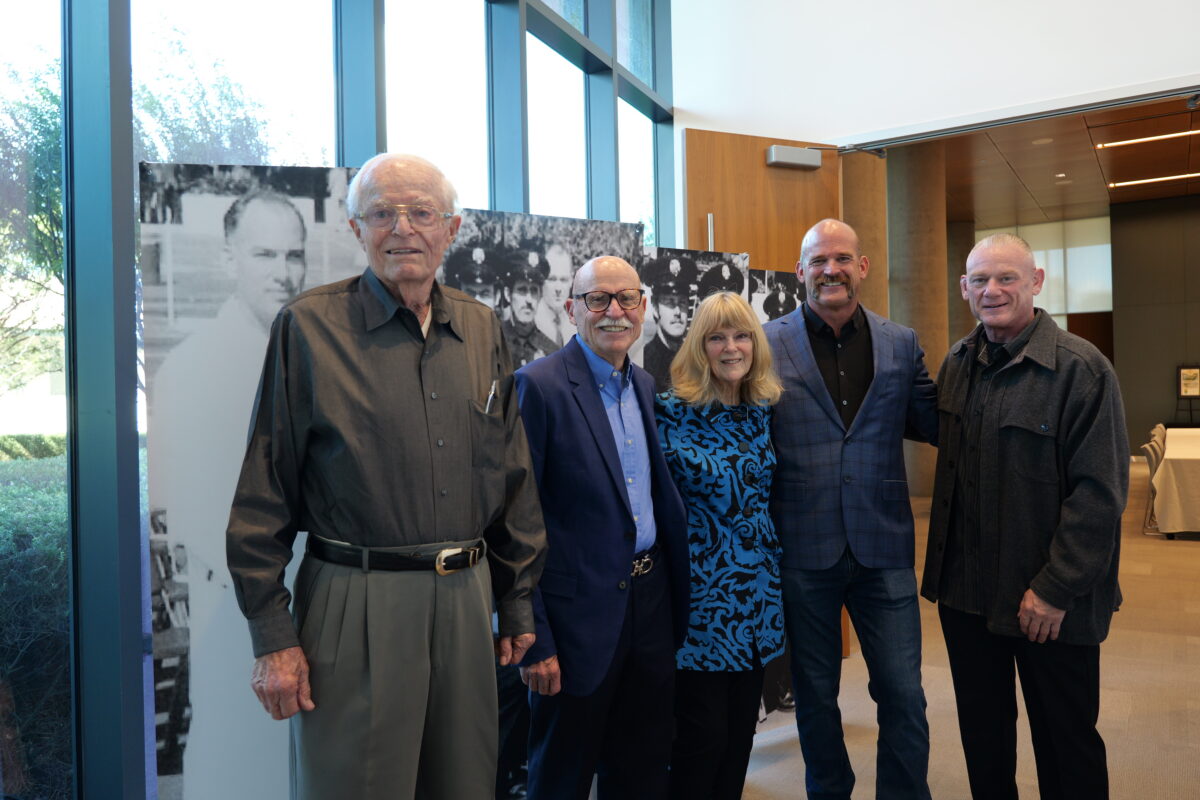
Ms. Bebout, the county’s first mobile intensive care nurse, described him as “a pioneer and a politician, a protector of people, and a builder of foundations.” Los Angeles County Supervisor Janice Hahn, daughter of Kenneth Hahn, shared a video tribute, and several of the original paramedics and their families attended in person.
Bill Ridgeway, one of the program’s first graduates, remembered that Dr. Criley called the early paramedics “his boys.” “His main thing, he just wanted to save lives,” he said. Mr. Ridgeway recalled a rescue in which he and his partner revived a teenager who had collapsed while umpiring a Little League game. At the case review that followed, Dr. Criley offered just two words, the “perfect rescue,” and walked out of the room.
A Teacher who Answered with Questions
Dr. Criley trained more than 200 cardiologists and taught thousands of medical students, residents and nurses. Speaker after speaker described a demanding, Socratic teacher: conferences that began at 7:30 a.m. sharp, a tie every day, and no room for a bluffed answer.
Priya Pillutla, MD, Associate Chief of Cardiology, recalled her first conference as a fellow, when Dr. Criley refused to simply tell her the diagnosis and instead answered each of her questions with another question. “Maybe 10 or 15 minutes later, I figured out that it was aortic stenosis,” she said. “And more importantly, I remembered why.”
Jamil Aboulhosn, MD, now Director of the Ahmanson/UCLA Adult Congenital Heart Disease Center, admitted that Dr. Criley once “scared me witless,” and that the fear made every trainee raise their game. “We are who we are because of this man,” he said.
Peter Pelikan, MD, offered the fellows’ perspective in reverse. “The reason he’s asking you is because he believes you can answer,” he said. “It’s bad if he’s not asking you.”
Behind his high standards was deep care for his trainees. Robert Siegel, MD, Professor Emeritus at Cedars-Sinai, learned years later that when he needed surgery just before starting his fellowship, Dr. Criley quietly arranged for his appointment to begin early so he would have health insurance.
Another former fellow recalled walking into Dr. Criley’s office at 5 p.m. the night before his first dreaded case conference and leaving three hours later, fully prepared, with Dr. Criley beaming in the audience the next morning.
His teaching was recognized with the American College of Cardiology’s Distinguished Teaching Award in 2016. In 2015, the cardiology fellows created a teaching award in his name and made him its first recipient. He was still teaching well into his eighties.
A Giant in Cardiology, a Mentor to Many
Dr. Criley also served as Medical Director of the St. John’s Heart Institute in Santa Monica. In a reflection of his enduring commitment to advancing cardiovascular research, colleagues recalled that he requested the establishment of a research facility on the Harbor campus in lieu of additional compensation. The St. John’s Cardiovascular Research Center at The Lundquist Institute housed Harbor-UCLA’s cardiology division from 1991 until this fall.
Joseph Thomas, MD, Chair of the Department of Medicine, pointed to Dr. Criley’s leadership, including his decision to step down as division chief while still young and bring in successors who built on his work. “For us cardiologists,” Dr. Thomas said, “Mike Criley is our giant.”
The Man behind the standards
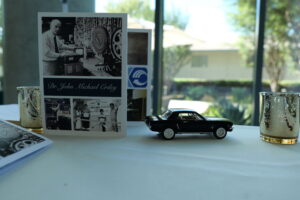
Those who knew him best remembered his humor as well as his rigor: the puns and “dad jokes before dad jokes were even a thing,” his devotion to A Prairie Home Companion, a bear claw from Torrance Bakery almost every day, and the 1964½ Mustang parked outside his office before anyone else arrived each morning.
Dr. Criley is survived by four sons, Michael, Jr., Stephen, Stuart, and David; daughters in law Suzanne, Susie, and Jasminka (also a physician); and four grandchildren, Logan, Monica, Williams, and Richard.
Dr. Criley had the rare chance to hear what his colleagues thought of him while he was alive, at a celebration of his 50 years of service. On November 14, friends and colleagues shared many of those same sentiments again. “We’ll go home with Dr. Criley in our hearts and minds,” Dr. Oudiz said in closing, “for the rest of our lives.”
Click here to watch the webinar recording of Dr. Criley’s Celebration of Life.
Photo Gallery