Pregnancy is hard work for the heart. To keep both mom and baby healthy, it has to pump much more blood than usual. For most women, the heart handles it just fine. But for some, the strain is too much, and the heart starts to fail.
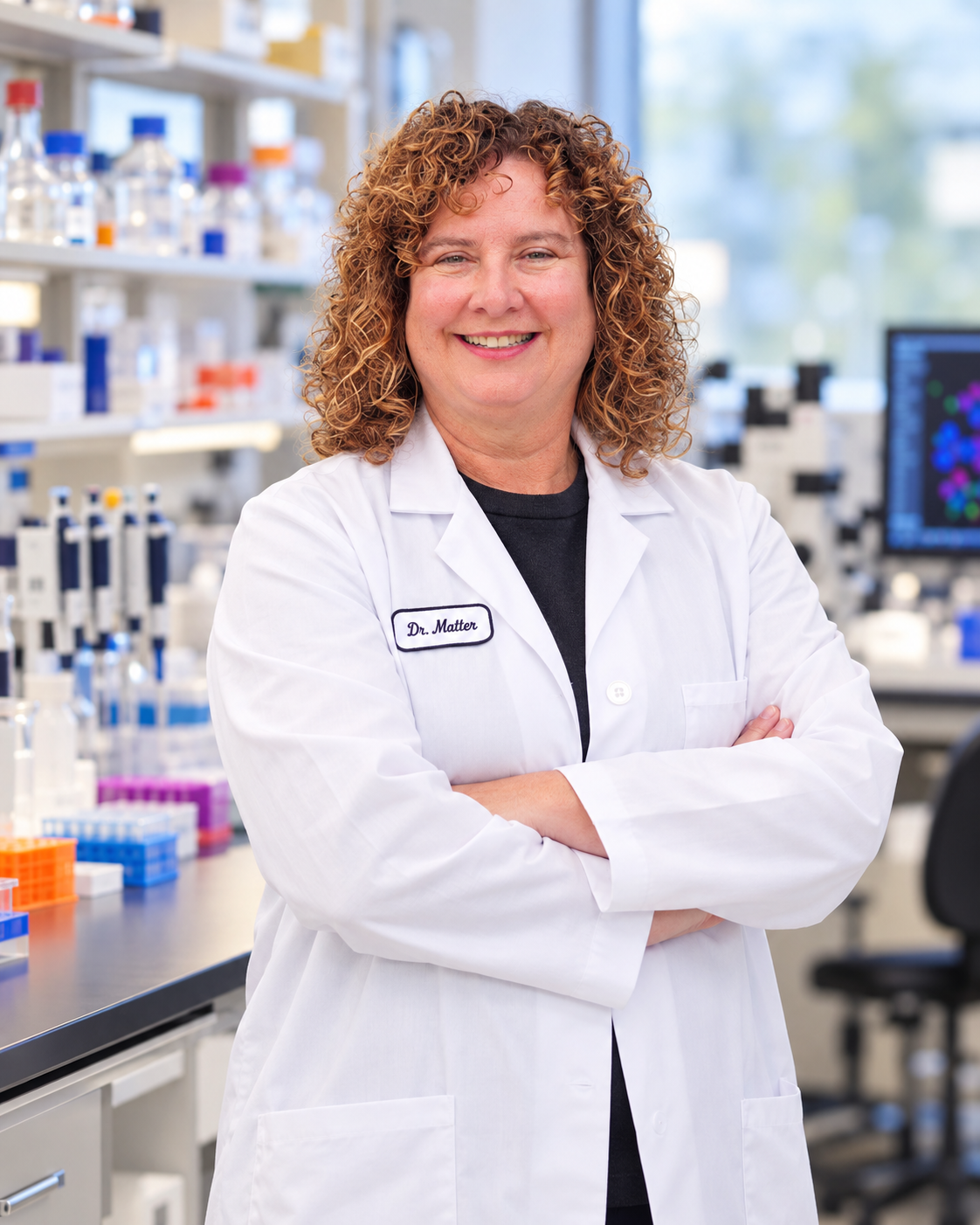
A new paper in JACC: Advances, a journal of the American College of Cardiology, lays out a plan to find out why. Its senior author is Michelle L. Matter, PhD, an investigator in The Lundquist Institute’s Advanced Therapeutics and Biomedical Technologies Innovation Hub.
A rare but serious danger
Doctors call this condition peripartum cardiomyopathy, or PPCM. Essentially, the heart muscle suddenly becomes weak around the time a woman gives birth, even if she has never had heart trouble before. Her heart can no longer pump blood the way it should.
PPCM is rare, affecting roughly 1 in every 2,200 births in the United States, but it can be life-threatening. Currently, there is no medicine made specifically to treat it.
It also doesn’t affect everyone equally. Black women are more likely to develop PPCM and often have a harder time recovering. And Louisiana, where this study takes place, has the highest rate of mothers dying from pregnancy-related causes in the country.
Could the answer be in our genes?
Our genes are like an instruction manual for building and running the body. Sometimes a small typo in those instructions can make a person more likely to develop a disease.
Scientists have found that some women with PPCM carry the same kinds of typos seen in families with inherited heart problems. Dr. Matter’s team has also found that turning off certain genes in mice causes a condition much like PPCM. Now they want to know whether the same genes matter in protecting the heart during pregnancy. So far, most genetic research on PPCM has focused on women of European descent, leaving out many of the women most affected.
As easy as a cheek swab
To find out, Dr. Matter and her team at The Lundquist Institute teamed up with Woman’s Hospital in Baton Rouge, Louisiana, on the PERCVD Trial, the first study of its kind in the Gulf South.
Taking part is simple. Women get a kit in the mail, rub a swab inside their cheeks, and send it back. There’s no need to visit a clinic, which makes a big difference for busy new moms. Scientists then read the complete set of genetic instructions in each sample, looking for typos that might explain why some women’s hearts struggle during pregnancy.
The study plans to include up to 200 women who have had PPCM and 200 healthy moms for comparison with results expected in the coming years.
The potential to save lives
If the study finds genes linked to PPCM, the impact could be life changing. Doctors could identify women at higher risk and watch their hearts more closely in a future pregnancy. Relatives, like sisters and daughters, could learn whether they share the same risk, and understanding the cause could lead to the first treatments made just for PPCM.
With more support for this research, the team hopes to add genetic counselors to guide families and expand the study to other pregnancy-related heart problems, helping more mothers stay healthy for their families who need them.