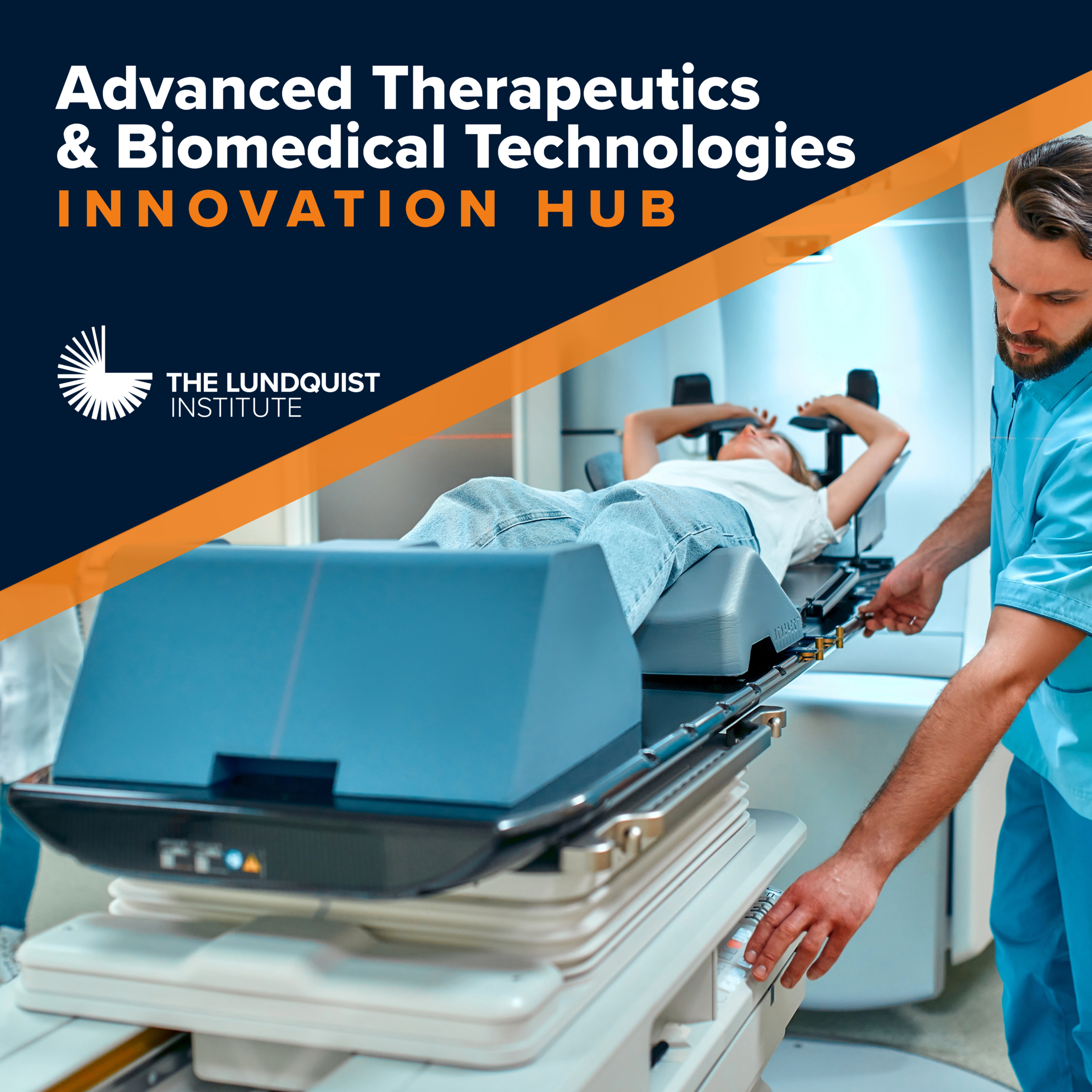
For The Lundquist Institute’s Advanced Therapeutics & Biomedical Technologies Innovation Hub, transformative science begins with a simple but powerful goal: improving the lives of patients through innovative therapies. Leading this effort are Lynda Polgreen, MD, and Paul Mathews, PhD, Executive Directors of the newly established Advanced Therapeutics and Biomedical Technologies Innovation Hub, a collaborative initiative designed to accelerate the development of treatments from discovery to patient care.
Together, Dr. Polgreen and Dr. Mathews bring complementary expertise that embodies the hub’s central philosophy—bridging clinical insight and scientific innovation to solve some of medicine’s most challenging problems.
As a pediatric endocrinologist, Dr. Polgreen has dedicated her career to improving outcomes for patients with rare genetic diseases. She has led numerous clinical trials focused on repurposing therapies for conditions such as Sanfilippo syndrome, a devastating neurodegenerative disorder that affects children. Her work consistently begins with patient needs, translating observations from the clinic into therapeutic strategies that can meaningfully improve quality of life. Beyond her research, she has serves in leadership roles across rare disease and regenerative medicine programs, helping bring innovative therapies closer to patients.
Dr. Mathews, a neuroscientist, centers his research on rare neurogenetic disorders, including ataxia-telangiectasia, a progressive childhood disease that leads to severe neurological decline and shortened lifespan. His laboratory investigates the biological mechanisms underlying disease and develops therapeutic approaches ranging from small-molecule treatments to cutting-edge gene-editing technologies. Through collaborations with leading institutions and technology innovators, he is helping advance next-generation therapies while building new tools to understand and treat neurological disorders.
While their scientific backgrounds differ, both leaders share a common belief: the most impactful breakthroughs occur when researchers work across disciplines. That philosophy is at the heart of the hub.
The hub is being built as a collaborative ecosystem where investigators developing therapies—whether regenerative medicine, gene editing, advanced diagnostics, medical devices, or other emerging technologies—can connect, share expertise, and accelerate translation. Rather than organizing solely around individual diseases, the hub seeks to create “neighborhoods” of investigators united by therapeutic approaches and technologies. Basic scientists uncovering disease mechanisms, translational researchers developing interventions, and clinicians leading human trials all have a place within this community.
For prospective members, the hub offers more than scientific collaboration. Dr. Polgreen and Dr. Mathews envision an environment that reduces administrative barriers, strengthens access to funding opportunities, and fosters team science. By creating stronger connections between Harbor clinicians and Lundquist researchers, the hub aims to cultivate projects with broad therapeutic potential while ensuring that innovation remains grounded in real patient needs.
Ultimately, the hub represents a commitment to a uniquely Lundquist strength: close, respectful collaboration between physicians and scientists. Under the leadership of Drs. Polgreen and Mathews, the hub is building a community dedicated to transforming discoveries into therapies—and bringing hope to patients and families facing some of the most complex diseases of our time.