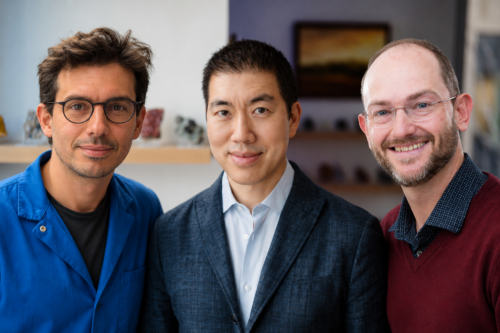
Paul Mathews, PhD, and collaborators at the Broad Institute will test whether gene editing can correct disease-causing mutations in models of a childhood neurodegenerative disease.
A gene editing program led by Paul Mathews, PhD, has received approximately $625,000 in new foundation funding to pursue a treatment for ataxia-telangiectasia, a rare inherited disease that progressively robs children of movement, balance and coordination. Dr. Mathews is a neuroscientist at The Lundquist Institute, a member of its Board of Directors, and co-Executive Director of the Institute’s Advanced Therapeutics and Biomedical Technologies Innovation Hub.
Action for A-T, a United Kingdom–based research charity, and A-T Children’s Project have jointly awarded the project £249,676 (approximately $339,000) for ~30 months beginning in October 2026 to focus on Prime Editing. The A-T Children’s Project, a United States nonprofit, has additionally funded research proposals totaling $286,389 to test Base Editing. All of the funding supports a single line of work: a collaboration between Dr. Mathews at The Lundquist Institute, Romain Levy, MD, PhD, and David Liu, PhD, both of the Broad Institute of MIT and Harvard.
The studies supported by this funding are designed to answer whether novel gene editing approaches can restore the missing protein and prevent or halt the loss of motor function in a preclinical model of A-T. If successful, these preclinical studies could support the development of treatments that protect brain cells, preserve movement and coordination, and improve quality of life for children living with the disease. The work will help to rationalize further studies focused on safety and benefit in children.
Correcting the cause, not managing the symptoms
Ataxia-telangiectasia, usually shortened to A-T, is caused by mutations in both copies of the ATM gene. This gene provides instructions for a protein that helps coordinate the cell’s response to DNA damage. In classic A-T, problems with movement and coordination typically begin in early childhood. Small, widened blood vessels on the eyes and skin—the feature that gives the disease the second half of its name—often appear later. A-T is also associated with immune-system problems, increased cancer risk and heightened sensitivity to ionizing radiation, including X-rays. Supportive care can ease the symptoms, but no treatment currently prevents the neurological decline.
According to the National Ataxia Foundation, the global prevalence of A-T is estimated to be between 1 in 40,000 and 1 in 100,000 people. The foundation also estimates that about 1 in 100 people in the United States carry one altered copy of ATM without having neurological symptoms of the disease but do display an elevated risk for cancer.
Dr. Mathews’ collaborative project takes a different approach. Rather than managing symptoms, the team is testing two types of gene editing technology—base editing and prime editing—developed in Dr. Liu’s laboratory that can rewrite specific DNA sequences. The goal is to repair disease-causing ATM mutations and restore some ATM protein function in the brain. Base editing converts individual DNA letters, while prime editing can make a wider range of changes, including small insertions and deletions.
“We start with a single A-T-causing mutation and test how precisely and efficiently we can repair it in cell models, then evaluate it in an established mouse model of A-T,” Dr. Mathews said. “We can then see whether ATM protein is restored, whether nerve cells in the brain are protected, and whether movement and coordination improve or stabilize in a mouse model. If it works, the approach could extend to a wider range of ATM mutations.”
Studies of people who retain some ATM activity show that they can have milder disease, suggesting that partial restoration may be worth investigating. This does not establish that restoring ATM activity will reverse existing nerve-cell damage. The cerebellum, a brain region essential for balance and coordination, is where the team will look first for signs that edited cells are being protected.
Gene editing and a complementary drug strategy
The team’s new funding builds on work already underway in the Mathews Lab. The gene editing studies will use both an established mouse model and a new model the team will generate specifically for prime editing. Dr. Mathews’ team reported a mouse model in 2021 that combines an ATM premature-stop mutation with loss of a second DNA-repair protein, aprataxin. The model develops progressive motor impairment and shrinkage of the cerebellum. The model will be used to study how A-T damages the nervous system and to test a drug candidate designed to overcome a faulty “stop” signal in the gene. In some patients, a premature stop signal prevents production of full-length ATM protein. The investigational drug is meant to get the cell to move past that “stop” so the cell can finish building the ATM protein.
In collaboration with other investigators at The Lundquist Institute and UCLA, Dr. Mathews’ team is developing this class of drug to restore protein production across a range of diseases caused by these premature stop signals (also called premature termination codons). The gene editing program adds a complementary strategy: repairing DNA rather than helping cells read past a premature stop signal during protein production.
Where the pieces come together
This gene editing work also reflects the model Dr. Mathews helps lead at the Institute. With Lynda Polgreen, MD, MS, he serves as co-Executive Director of the Advanced Therapeutics and Biomedical Technologies Innovation Hub, which organizes investigators around shared therapeutic approaches and technologies rather than around single diseases. The A-T program is a working example: a basic neuroscience laboratory, gene editing expertise from the Broad Institute, and a rare disease community working together to test potential treatments for A-T.
About the funders
The A-T Children’s Project partners with academic and industry investigators worldwide to support research, clinical teams, data platforms and biomarker development, with the goal of improving disease management and finding a cure. Action for A-T funds research aimed at slowing or preventing the neurological decline that current care cannot address. For this collaboration, both organizations are supporting research into whether disease-causing ATM mutations can be corrected in experimental models.